
June 2026 · Governance & territories
Since 2021, Haiti has faced a political, security, and institutional crisis of exceptional scale. The weakening of central institutions, widespread insecurity, and the interruption of many public services underscore a reality that has too often been overlooked: a State does not hold together through its central institutions alone, but also through its local territories. This reflection on decentralization and the communes is therefore intended not as an abstract academic exercise, but as a framework for rebuilding the Haitian State from the local level upward.
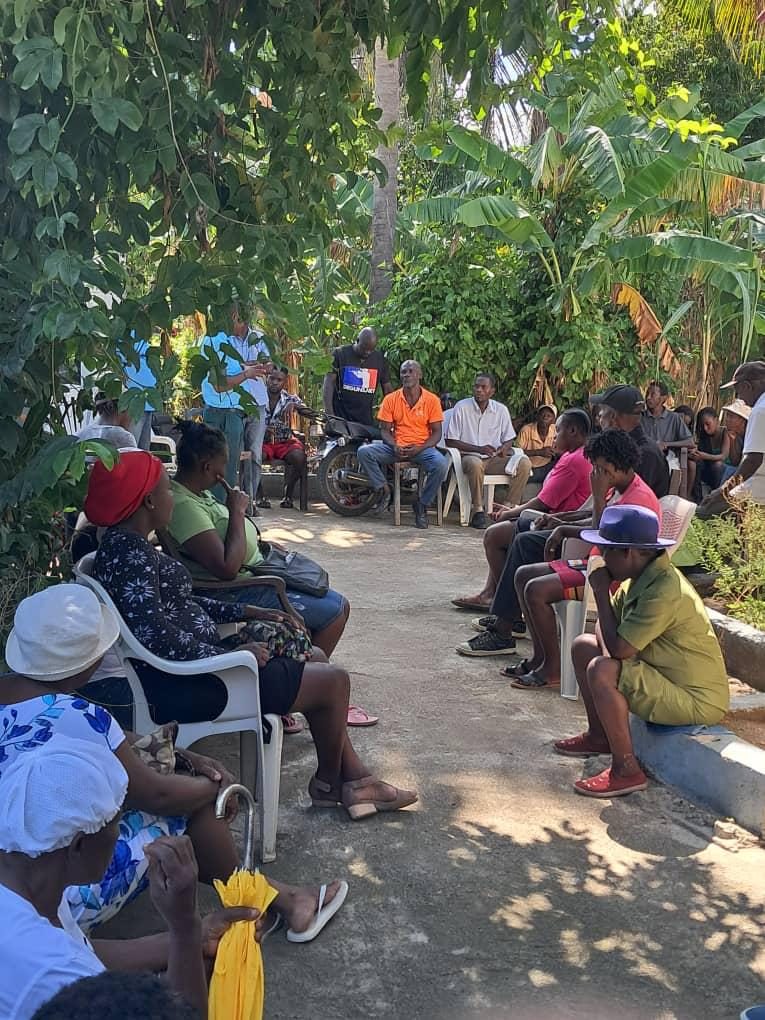
The commune is far more than a mere administrative tier. It is the level of government at which access to public services, local planning, stakeholder coordination, and accountability to citizens take concrete form. At this level, closest to the population, the State either becomes tangible or gradually recedes.
Yet Haitian administrative history, since 1804, has been built around a growing centralization of powers and resources, today largely concentrated in Port-au-Prince. This concentration has fueled rural exodus, the marginalization of the regions, a chronic deficit of local services, and an erosion of trust in institutions. The territories farthest from the capital are also, too often, the most neglected.
The 1987 Constitution had nonetheless opened another path. It established a clear territorial structure comprising the communal section, the commune, and the department, together with a resolutely decentralized vision of the State based on elected councils and local participation. Nearly four decades later, however, a persistent gap remains between the legal recognition of local governments and their practical effectiveness. Without clearly assigned responsibilities, capable local administrations, and adequate resources, communal autonomy remains largely theoretical.
Making decentralization effective therefore requires meeting several conditions. Responsibilities between the central State and local governments must be clarified, communal administrations strengthened, and communes given predictable financial resources; citizen participation must be institutionalized beyond mere information-sharing. Credible decentralization also calls for accountability and citizen-oversight mechanisms to prevent clientelism and the local capture of resources.
Territorial coordination and inter-communal cooperation are equally important. Many challenges, including water management, roads, waste, watersheds, and markets, extend beyond the boundaries of a single commune and require cooperation among neighboring jurisdictions. Better coordination among communes, communal sections, public institutions, NGOs, and international partners would reduce fragmented interventions and strengthen local impact.
The 2021–2026 crisis gives this reflection particular urgency. Where the central State struggles to ensure the continuity of its functions, strengthened communes could help maintain essential services, support human security, and build territorial resilience. Rebuilding from the territories is not a fallback: it is a way of rebuilding the State on foundations closer to citizens, more inclusive and more durable.
This text is intended as a contribution to the debate and an invitation to place the communes back at the heart of the national project. It does not claim to offer definitive answers, but seeks to open practical avenues for reflection. It is a personal contribution by Wilbert Georges, agronomist, development professional, and founder of AGRILEAD Training & Consulting LLC, to the institutional, professional, and academic discussion on decentralization and local governance in Haiti. The analysis does not constitute legal advice.